Why Booklet Printing Services Still Matter for Professional Communication
I have spent enough years in print production to watch a lot of trends come and go. Digital media was supposed to kill the brochure, then the flyer, then the booklet. Yet here we are, and the demand for well-crafted printed booklets has not disappeared. If anything, it has become more selective. People want something that feels substantial. They want paper that has weight, a finish that catches the light, and content that flows like a story. That is where professional booklet printing services come into play. They turn a PDF into a physical object that people actually keep.
A friend of mine runs a small architectural firm in Lancaster. For years he emailed portfolios to potential clients. He won some projects, but he always felt like his work got lost in an inbox. Last year he ordered a run of custom booklet printing for his portfolio. Spiral coil binding, a soft-touch laminate cover, and a finished trim size that fit neatly into a messenger bag. He told me the difference was immediate. Clients spent more time flipping through the pages. They called back with specific questions about projects they had seen in print. That is the kind of response you cannot get from a screen.
The Basics of Booklet Production
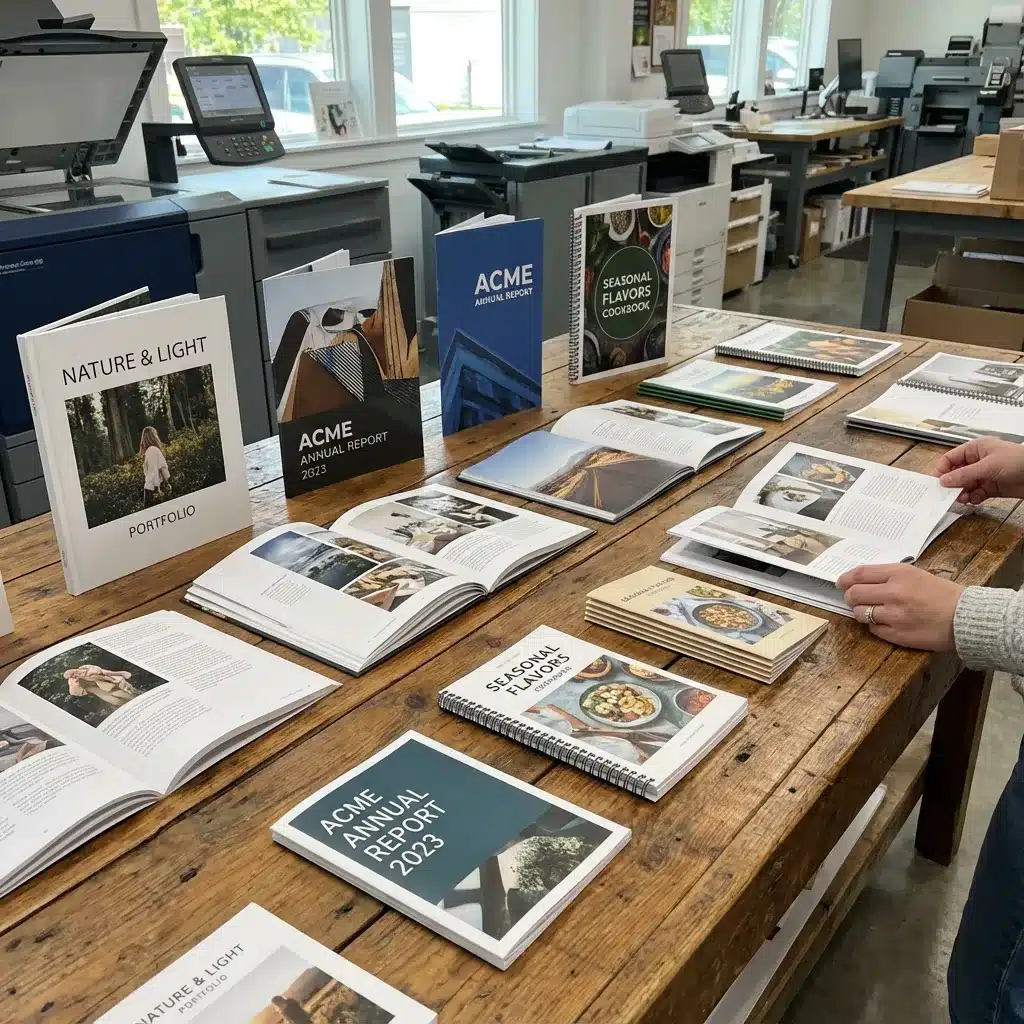
When people ask me about booklet printing services, I usually start with the three most common binding methods because the binding defines how the booklet feels and functions. Saddle stitching works well for thinner booklets, typically up to about 48 pages. Staples go through the spine fold, the pages lie flat when opened, and the cost per copy is low. Perfect binding creates a square spine with a glued edge, which gives a more book-like feel for thicker publications. Spiral coil binding uses a plastic coil that runs through punched holes, allowing the booklet to open fully and lie flat. Each method has a place, and the right choice depends on page count, usage, and budget.
Lancaster printing has a long history of craftsmanship, and that tradition carries over into modern shops. A good printer will ask about bleed requirements before you even send the file. Bleed means extending your background images and colors beyond the edge of the finished trim size, usually by one-eighth of an inch. If you skip it, you risk a thin white line at the edge after trimming. That is one of the most common mistakes I see in customer files. Another is forgetting to set up the document at the correct finished trim size from the start. Rescaling artwork later introduces distortions that are hard to fix cleanly.
Digital Printing Versus Offset Printing
One of the first decisions you face with any booklet project is whether to use digital printing or offset printing. Digital printing works like a high-end office printer. It runs directly from a digital file, requires no plates, and handles short-run printing efficiently. If you need fifty copies of a training manual for a workshop next week, digital is your friend. The turnaround is fast, and the setup cost is low. Offset printing uses metal plates to transfer ink onto paper. The initial setup takes longer and costs more, but once the press is running, the per-unit cost drops sharply. For runs of five hundred or more, offset usually wins on price and provides a richer ink laydown, especially on uncoated paper.
I once helped a client choose between the two for a series of event brochures. They needed three hundred copies for a conference, with full-color photos of their product line. We went with digital printing because the quantity fell into the short-run printing sweet spot. The Heidelberg digital press we used handled the color consistency well, and we added a UV coating to protect the covers from fingerprints and smudges. The client was happy, and the brochures looked fresh throughout the three-day event. For their next project, a catalog run of two thousand copies, we switched to offset. The plates cost more upfront, but the final price per booklet came out significantly lower, and the black text had a crispness that digital sometimes struggles to match.
Finishing Touches That Make a Difference
The printing itself is only part of the story. Finishing options can elevate a booklet from ordinary to memorable. UV coating adds a glossy or matte layer that resists wear and gives the cover a polished look. Laminate finishing is similar but uses a thin plastic film that bonds to the paper, offering even more durability. For a portfolio printing project, I usually recommend a matte laminate cover with a slight texture. It feels professional without being flashy, and it holds up well when people slide the booklet in and out of bags.
Pocket folders and presentation folders often accompany booklets in a complete marketing package. When a client orders a custom booklet for a sales pitch, I suggest pairing it with a presentation folder that has the same branding. The folder holds the booklet along with a few business cards and a separate spec sheet. The whole package feels coordinated, which builds trust. Business cards alone do not carry the same weight when you are trying to win a large contract.

Practical Considerations for Your Next Booklet Project
If you are planning a booklet for your business, start with the purpose. Is this a training manual that will be used repeatedly and needs to survive being stuffed into a binder? Then perfect binding or spiral coil binding makes sense, and you might want a heavier paper stock. Is it a one-time event program? Saddle stitching with a lighter cover stock keeps costs down and still looks good. The content should guide the format, not the other way around.
When you work with booklet printing services, you gain access to expertise that saves time and money. A good print shop will review your file for common issues like low-resolution images, missing fonts, or incorrect color profiles. They will ask about bleed requirements and finished trim size before you commit to a run. They can also suggest paper stocks you might not have considered, such as a felt-finish cover that adds texture without adding weight. I have seen clients walk in with a rough idea and walk out with a finished product that exceeded their expectations, simply because they asked questions early.
Marketing collateral like booklets still holds a unique place in business communication. A well-designed booklet sits on a desk for weeks. It gets passed from one person to another. It ends up in a stack of reference materials that people actually consult. An email gets deleted, but a printed booklet has a physical presence that demands attention. For event brochures, training manuals, and portfolio printing, the tactile experience of turning pages and seeing high-quality images on coated paper creates a connection that digital media rarely achieves.
I recall a Lancaster nonprofit that needed a small run of booklets for an annual fundraising gala. They had a tight budget and a tight deadline. We used digital printing with saddle stitching and a UV-coated cover. The booklets arrived two days before the event, and the organization sold out all of their sponsorship packages that night. The donors who attended told the organizers that the booklet made the cause feel real and urgent. That is the power of print when it is done right.

Booklet printing services are not just about putting ink on paper. They are about understanding how the final piece will be used, how it will be held, and how long it needs to last. Whether you choose saddle stitching for a quick event program or perfect binding for a substantial catalog, the details matter. Work with a printer who asks the right questions and who has the equipment to deliver consistent quality. In Lancaster, that tradition runs deep, and it shows in every finished piece that leaves the shop.